Monday, July 27, 2009

Plate Dinners at the St. Michael’s Bazaar


Point Cadet was a tight-knit, largely Catholic community. If you lived on the Point, you probably were a member of St. Michael’s Parish. You may even have gone to St. Michael’s grade school.

St. Michael’s was started as a mission to serve the people of the Point in 1917 (or 1907 depending on which source you go by).

When most people think of St. Michael’s, they think of the modern seashell-domed fisherman’s church, prominent in this blog’s header. That church, though it became the Point’s most distinctive landmark, was only built in 1964. The original St. Michael’s church was housed in a wooden structure down on First Street. It burned in 1969.

My grandparents and two aunts married there. Almost everyone in my family, myself included, was christened at St. Michael's. My mother, her siblings and a couple of my cousins went to St. Michael’s school and made their First Communions and confirmations in the parish.

Though I largely lived in other parishes, we went to Mass fairly regularly at St. Michael's since we spent all our holidays and a lot of weekends at my grandparents’ house. As a kid, I was scared of the long Cubist-style stained glass windows depicting the apostles.

And we always patronized the St. Michael’s bazaars, the fund raisers held to help support the church and school.

St. Michael’s bazaars were great multi-generational social occasions – you saw second, third, fourth and even fifth cousins as well as all your friends and your parents’ and grandparents’ friends. If the bazaar fell during high school sorority rush week, the pledges from Biloxi High and Sacred Heart could get their 300 signatures on a pillow case or whatever task the seniors assigned to them. The pledges had to wear tacky outdated clothes and unwashed hair. Oh, what teenage girls will do to be accepted by their peers.
You could take a chance on the cake walk. Purchase cuttings of heirloom plants. Stuff your face with candied apples and cotton candy. Listen to music. Play bingo. Or just people watch.
And you could always get a good plate dinner, usually seafood or chicken sausage gumbo with a scoop of potato salad floating in it. Or my personal favorite, baked chicken with dirty rice dressing.

This flavorful, well-spiced dish, featuring the “holy trinity” of Cajun cooking – celery, bell pepper and onion -- is a great accompaniment to often-bland baked chicken. The “dirt” is actually meat, chopped chicken livers and gizzards and/or ground sausage or ground beef. Wish I had a big plate of it right now. This recipe makes a lot, but then you’re going to want a lot.

Dirty Rice Dressing

¼ cup cooking oil
½ chicken liver, parboiled and chopped fine
1 lb of chicken gizzards, parboiled and chopped fine
3 lb of ground beef or pork sausage
3 large onions, chopped fine
1 cup chopped celery
1 bunch green onions, chopped
1 bunch parsley, chopped
2 medium bell peppers, chopped
3 cloves chopped garlic
4-6 cups cooked rice
Salt and pepper to taste.

Saute onions, celery, bell pepper and garlic in oil. Add gizzards and liver. Cook about 30 minutes. Add beef (or sausage), green onions, parsley and salt and pepper. Cook 30 minutes more. Mix in cooked rice. Stir thoroughly. May use Kitchen Bouquet to achieve desired color.
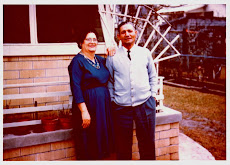
Photo: All of the Soljan children, including Uncle Raymond shown here in the late 1940s, made their First Communions and confirmations at St. Michael's.

Wednesday, July 22, 2009

Shopping at the Neighborhood Grocery

Back before the days of supermarkets, everyone shopped at the neighborhood market. In their heyday, a mom and pop grocery stood on just about every corner of Point Cadet. There were no fewer than 18 in existence during the 1950s alone.

Parents sent their kids to the store with hand-written grocery lists. The accommodating store owners helped fill them while the customer waited. The shrimpers charged groceries for their upcoming trips on their “boat bills.”

Corner groceries were also meeting places. You could always find a few neighborhood regulars inside or on the benches outside just shooting the breeze. In my day, kids liked to congregate there after school to turn in refundable soda bottles so they could buy candy and ice cream.

The Point Cadet grocery that stands out in my mind is Pitalo’s on Cedar Street. The proprietor, Mr. Rushie, was an expert at deciphering illegible handwriting and translating the fractured English so many of his customers spoke. He was also a pretty good mind-reader.

For example, one time my mom was sent to Pitalo’s with an order for “seven steaks.” Or so she thought. Mr. Rushie was fairly certain Grandpa wasn’t planning on blowing the family’s weekly ration points on a grill night. He quickly surmised that what Grandpa actually wanted was a couple of center chuck steaks, a shoulder cut sometimes called seven steak because of its bone which is shaped like the number “7.” The preferred cooking method for this fairly tough cut is to braise as in the smothered steak recipe below.

Tins of sardines, coveted as "boat snacks" were neighborhood grocery best-sellers. Grandpa enjoyed breaking French bread into little chunks, gently rubbing the bread over the fish then dunking into the oil the sardines were packed in. He also ate the sardines (whole or mashed into a spread) on saltine crackers with a gob of yellow mustard.

Last year, when I made my pilgrimage to Croatia, I noticed lots of people in the market buying oil-packed anchovies and loaves of crusty bread then heading over to a bench and eating them on the spot.

Boy did that take me back.

Smothered Seven Steaks

2 seven –bone steaks (or chuck shoulder underblade steaks)
1 large onion, cut in slices
1 bell pepper, sliced
2-3 cloves of garlic chopped
½ cup of olive or vegetable oil
1 t garlic powder
1 t onion powder
1 t black pepper
1 ½ cups of beef stock or beef bouillon
Salt to taste (at least 2 t)

Wipe down steaks. Season with salt, pepper, granulated garlic, onion powder. Heat oil in a cast-iron skillet. Brown the steaks on both sides, then remove. Add onions , garlic and bell pepper and cook until onions begin to caramelize. Return the steaks to the skillet and cover with the beef stock. Stir. Bring to a boil, then reduce heat to a simmer. Cover and cook for about 1 ½ hours until the meat is fork tender. If the onion gravy is too thin, remove the lid and let it boil down. Cut the meat in chunks and serve over rice. Serves 6 people.

Sunday, July 19, 2009

The Day Chinese Cuisine Came to Point Cadet

My mother, Toni, was an excellent cook who took an experimental approach to flavors and always pushed the boundaries of her recipe repertoire. Thanks to her, I have a fairly broad palate.

Her view of a kitchen as a test lab started while still in her teens. When Nona went away to visit relatives in Bellingham, Washington, Toni and her sisters all took turns cooking the family back home dinner. For the most part, they stuck to the tried and true -- roasts, soups, beans. But Toni decided to shake things up.

Modern supermarkets were just showing up in Biloxi around that time, as were exotic convenience foods.

Back then, canned food was pretty lousy –mushy, tasteless vegetables packed in water and salt. Bleh. Somehow, somewhere my mother came across a can of Chinese chow mein vegetables. Mind you, at that point in her life, she had never actually eaten chow mein – or any Chinese food. But she saw that can and her imagination soared – at least as far as her limited life experience would let it.

She heated the vegetables, seasoned them with salt and pepper and a dab of butter. And dumped the whole unappetizing mess over sticky instant rice. No meat. No soy, oyster, hoison, fish or hot chili sauce. No granulated ginger or rice vinegar. Not even crispy chow mein noodles. Not that she knew any of those Asian condiments even existed.

There were some very glum faces around the dinner table that night.

Aunt Frances just happened to stop by. She took one look at the plat du jour, crossed herself and ran back home. She told Uncle Frank, “Jesus, Mary and Joseph those kids are gonna starve.”

She hastily threw some spaghetti from her own stovetop into a bowl and delivered it to her cheering brother in law, nieces and nephew.

Five out of the six plates of that pallid chow mein were thrown to the dogs. But proud, hard-headed Toni insisted on polishing off her plate down to the last limp bean sprout. She would later recall that as the worst meal of her life.

This doomed experiment aside, my mother became a fan of Chinese food. Saturday night dinner at the Chinese place on Highway 90 became a highly anticipated family outing at our house (even though my sister Kim only ate their hamburgers). For these occasions, Kim and I wore matching silk lounging pajamas from the Buena Vista hotel’s Oriental gift shop (And what a cool place that was. Loved the little dolls that came with their own wig collection.)

Toni even took out a wok again, thanks to Earl Peyroux, the host of “Gourmet Cooking” on New Orleans’ local PBS station. Mr. Peyroux was a Cordon Bleu trained chef and my favorite TV chef ever. We loved his Chinese fried rice recipe.

Mama and Mr. Earl are both stir frying with the angels now. And if this is on the menu, Heaven is a happy place to be tonight. Fried rice was a good “clean out the refrigerator” meal at our house. For some reason, we always ate it with buttered toasted French bread– hardly authentic, but a tasty local touch.

Three decades after the chow mein debacle, and a decade after our Saturday night sweet and sour chicken runs, genuine Asian cuisine came to Point Cadet along with its newest wave of immigrants from Vietnam. This delectable cuisine from Southeast Asia bore no resemblance to my mother’s attempts nor to what we ate on our Saturday night chopstick fests.

But it did add another layer of richness and depth to Point cuisine and culture. And its one of the healthiest cuisines going. Lately, I’ve gotten into experimenting to Vietnamese recipes like this one for “Pho” Rice Noodle Soup with beef from Epicurious.


Earl Peyroux’s Chinese Fried Rice

2 eggs, beaten
2 t peanut oil
2T, additional peanut oil
6 green onions (sliced)
1 lb sliced mushrooms
1 small green or red pepper (diced)
1 cup celery (chopped)
¾ cup water chestnuts sliced
1 cup bean sprouts
2 cups small boiled shrimp (cut in half). Diced ham, cooked pork or chicken can be substituted.
3 T soy sauce
Salt and pepper to taste
3 cups cooked rice

In a 9-inch skillet cook the eggs in peanut oil to make a large egg crepe. Remove to paper towels. Fold crepe over on itself several times. Cut the rolled egg into thin shreds. Set aside.
Pour additional oil into a hot wok and allow to heat very hot. Add and stir-fry, one at a time the green onions, mushrooms, green pepper, celery, water chestnuts, bean sprouts, shrimp (or other meat) and reserved shredded eggs. Toss ingredients 30 seconds. Add soy sauce, salt and pepper to taste. Add cooked rice and blend well until hot. Transfer to a serving dish. Serves 8.

Photo: My sister Kim (right) and I are ready for Chinese night, 1967.

Wednesday, July 15, 2009

Out of This World Cheesecake

From 1969-1971, my parents, sister and I lived in Baton Rouge, Louisiana. Twice a year Aunt Selema and her family stayed the night with us en route from their home in San Antonio to Biloxi.

On July 20-21, 1969, their visit coincided with the first Apollo 11 moon landing and moonwalk. We (and half a billion other people) were all glued to the TV watching Neil Armstrong take his historic first step for mankind.

All except for my dad, who stuffed with all the good food Mama had spent days cooking, snored through the whole thing in his Barcalounger.

Mama woke him up when it was all over and told him that the astronauts had discovered little green men and that the moon actually was made of green cream cheese just like the Mardi Gras song, "If Ever I Cease to Love" says.

He believed her for about the three seconds it took for him to wake up.

Maybe he just had cream cheese on the brain because he had just eaten half of her famous cheesecake - which actually is out of this world.

It's a classic not-overly-sweet New York style cheesecake. My daddy liked it so well, he often had her make it for events he catered at the restaurant. I often requested it as my birthday cake. I lost the actual recipe during the hurricane, but I think this one is pretty close.

The zwieback crumb crust doesn't overpower the taste of the cheesecake as graham cracker crusts so often do. If you can't find zwieback in the cookie section at the grocery store, try the baby food aisle.

Mama's Out-Of-This-World Cheesecake

Crust:
1 1/2 cups zwieback crumbs
2-3 T granulated (or brown) sugar
1/2 t cinnamon
6 T (3/4 stick) butter or margarine, melted

Batter:
1 1/2 lbs. cream cheese, softened
1 1/2 cups sugar
2 cups sour cream
1-3 T lemon juice
2 t vanilla extract
1/4 t salt
4 large eggs

Sour Cream Topping:
1 1/2 cups sour cream
1/4 cup powdered sugar or 3 T granulated sugar

Position rack in the center of over. Preheat to 350. Grease a 9" springform pan.

For crust, combine zwieback crumbs, sugar and cinnamon. Stir in melted butter or margarine. Press into prepared pan. Chill.

For batter, beat cream cheese until smooth, scraping down sides often. Add sugar. Beat until light. Blend in sour cream, lemon juice, vanilla, salt. Beat in eggs one at a time. DO NOT OVERBEAT TO AVOID CRACKS IN BATTER. Pour into pan. Bake until firm around edges and slightly brown (about 1 1/4 hours). Turn off oven. Cool cake in oven for about 30 minutes. Remove from oven and cool completely before adding topping.

For topping: Combine sour cream, sugar and vanilla. Spread over cooled cheesecake. Refrigerate overnight.

Sunday, July 5, 2009

Born on the Fourth of July (Not)

Happy 4th of July! I realize it's actually the 5th, but we have a tradition of celebrating this particular holiday late in our family.

It started the year my sister was born. She was supposed to be born on July 4. My grandparents were very excited by the prospect of a "firecracker" grandbaby. They were immigrants so for them, this was the ultimate sign that they had arrived in America. My mother, trying to accommodate, followed all their Old Country advice to bring on labor.

They told her to walk. So she walked. And walked. And walked. At the time, we lived right behind the then brand new Edgewater Mall in Biloxi. The indoor mall was the first of its kind in Mississippi. More importantly, it was air-conditioned. She did a lot of her walking there. She brought home a lot of cool things for the nursery. But no baby.

"Eat spicy food" was the next piece of advice from the Point. So on the 3rd, we all went to Angelo's Italian restaurant in Gulfport. My mom ate two helpings of their famous spaghetti and left with the staff's good wishes ringing in her ears and a first-class case of heart burn. But no labor pains.

Ironically, her cousin's wife, also due on the 4th ate Uncle Vitisie's spaghetti daube that same night and welcomed her firecracker baby the very next day. The family joke was my mom ate the wrong spaghetti.

It took my sister several days to make her entrance into the world. But that never stopped us from celebrating her birthday like it was the 4th. We grilled hamburgers and hot dogs. We waved marked-down sparklers (my mother loved a bargain, something my sister has inherited) and ate off red, white and blue paper plates (again marked down). And usually the day before we'd have a ceremonial dinner of homemade spaghetti daube.

Photo: My sister Kim on her birthday, early 1970s. Almost a firecracker baby.

Spaghetti Daube

In spaghetti daube, the meat sauce is made from an inexpensive roast, usually chuck, slow cooked in spicy tomato sauce until it falls apart. It's also good made with chicken or shrimp. The sugar in the recipe helps cut the acidity of the canned tomatoes. The traditional seasonings are nutmeg and cinnamon, but you can sub out oregano and basil.

2-3 large onions, chopped

2-3 stalks of celery chopped

4-5 cloves of garlic, chopped

1 green pepper, chopped

2 large cans of whole tomatoes

2 cans of tomato sauce

1 T of sugar

1/2 t nutmeg

1/2 t cinnamon

Dash of ground cloves or allspice

1 t of Worcestershire sauce

Salt and pepper to taste

Boneless chuck or rump roast (3-4 lbs)

1/4 cup olive or vegetable oil

Water as needed

Saute onions, celery, green pepper and garlic in oil until tender. Add tomatoes and cook down. Add tomato sauce, sugar, seasonings and water as needed. Cook about an hour.Cut meat into large chunks and add. Cover and cook about 2 hours over low flame, stirring and adding water as needed to keep from sticking. Serve over spaghetti, big macaroni or rigatoni.

Monday, June 22, 2009

Summer and "The Pineapple Haircut"

Summertime on Point Cadet is, was, and always will be HOT. If you have never been there, take it from me, there is no heat like South Mississippi heat.

By the 60's, the grandparents had installed an AC window unit in their dining room. After running around barefoot all day, fishing, crabbing and scouting for returnable bottles by the side of the road, the grandkids would crowd in front of the unit, pushing and shoving for the privilege of getting a full Arctic-like blast on our heat-flushed cheeks.

My mother and her siblings did not have this luxury during the summers of their childhood. Keeping cool then meant lying down for an afternoon nap in a darkened room. And getting the dreaded "pineapple haircut."

As soon as the pleasant temps of early spring warmed around Easter time, my nona marched her daughters to the neighborhood barber shop for identical short bobs. No amount of weeping, wailing and gnashing of teeth (and reportedly there was plenty) could get them out of this seasonal ritual. It was as inevitable as their hand-me-down Easter dresses. When a little Soljan girl grew hair long enough to cover her ear lobes, she was old enough for the pineapple haircut.

I'm not sure how this 'do came by its name. In the front, the cut was the classic ear-length precision bob topped off with a fringe of short bangs, not unlike the style sported by Prince Valiant and Buster Brown. The back was shingled, like a roof. Or perhaps like a pineapple top?

The inaugural cut of the season was entrusted to the skills of a professional barber. My nona administered the touch-up trims herself. If the girls were lucky, she turned the job over to her sister Frances who could cut in a straight line.

During the summer, when it was too hot to turn on the oven, salad platters, using leftovers, were frequently served for dinner. Here are a few of Nona's favorites. These are also included on page 22 of the Slavonian Ladies Auxiliary cookbook.

SALAD PLATTERS

I. Cooked snap beans and boiled, sliced potatoes.

II. Boiled, peeled shrimp, sliced celery, sliced sweet pickles and raw onion rings.

III. Boiled meat (usually a piece of chuck roast left over from soup), sliced potatoes, sweet or dill pickles and raw onion rings. (My favorite)

Sprinkle platters with oil, vinegar, salt and pepper. The bean and shrimp platters are best served a little warm. The beef platter is best at room temperature.
Photo caption: The Soljan girls circa 1935. Clockwise from top left: Marie, Selema, Antonia and Dolores.

Sunday, June 21, 2009

A Father's Day Tribute to Grandpa


It would be wrong to celebrate Father's Day on this blog without a nod to the Soljan family's paterfamilias.

Mato Soljan's story was the classic immigrant's tale -- one of hard work and endurance with its share of tragedy.

Unlike my nona, who largely grew up in the heart of her family in Biloxi, my grandfather came here alone as a young adult. He never saw his family or native land again.

A second son, Mato shouldered the responsibilities of supporting his family when his older brother entered the priesthood.

Like many young men on Hvar, he was a fisherman and occasional deck hand/galley help on merchant ships. He served his brother as an altar boy in the parish church.

Dalmatia, in the year of my grandfather's birth, was part of the Austrian empire. With all of Europe filled with economic and political instability after the first world war, he began looking abroad for a brighter future. Waves of Croats left home during this time to build new lives in the Americas, Australia and New Zealand.

Mato and a shipmate planned to jump from their merchant ship when it pulled into port in New York. Another crew member ratted them out, and the captain threw them into the ship's brig. Their next opportunity was Galveston, Texas. Knowing they were under surveillance, they jumped overboard a few miles out and swam to shore using the lighthouse as their guide.

According to Mato's immigration papers, this was in December 1921. The water was cold. Mato, just turned 23, was not a strong swimmer. The currents off Galveston can be strong. Still they made it.

He spent a year or so in Galveston washing dishes, bussing tables and helping out in kitchens to make ends meet. He taught himself English by reading newspapers and captions at the movies (silent in those days). He practiced his new language with a Japanese friend from the restaurant.

Biloxi, Mississippi, at this time was known as the Seafood Capitol of the World. It was home to a thriving Croatian community. Jobs on the shrimp boats and in the factories were plentiful. His friend who had jumped ship with him had family there, including a widowed cousin willing to let rooms in her house to new Croatian immigrants from good families.

And so "Mike," as Mato was now known, went to Biloxi. He let a room from his friend's cousin and worked in the shrimp fleet. He continued to save his money with the dream of bringing his mother and youngest siblings to America.

He was never able to realize this dream. His mother died. His siblings drifted into lives of their own. He continued to send money home.

Mike married his landlady's daughter. Together they brought seven children into the world. They buried their oldest son, Mato Jr., before his third birthday. They built a house on the Point. It washed out from under Mike during the hurricane of 1947 as he tried vainly to sandbag it against the surge.

He rebuilt the house himself. And nearly lost it again 22 years later when Camille roared ashore. By now, he was over 70.

Grandpa was a jack of all trades who never fully retired. Into his 60s, he continued part-time work on the shrimp boats. Occasionally he still cooked on the merchant ships. When shrimp season was bad, he moonlighted as a security guard at Keesler Air Force Base. During the Depression, he and Nona operated a bakery. He learned to make and mend shoes, earning him the nickname "Shoemaker Mike."

If America turned out not to be the land of milk and honey as he once believed, Grandpa never complained. He became a U.S. citizen and was proud of it. He presented his 20 grandchildren with dollar bills for buying ice cream, candy, sodas and sno-balls, unaffordable luxuries during his own childhood. He always spoke English with a heavy Croatian accent -- and a baffling Japanese lilt.

His only indulgences were a private stash of Hershey's kisses hidden in his sock drawer and the ever-present pack of unfiltered cigarettes in his shirt pockets. The latter eventually killed him.

He must have known he was dying, but he never let on. The cancer, spreading from his lungs to his brain, told the family for him. By then, he only had weeks to live. His affairs were already in order.

His life may not have been perfect, nor were those of his children and grandchildren. We've all known our share of heartbreak and hard times, but nothing compared to what our lives could have been like had Grandpa been made of less sturdy stuff.

I'm sure that if he were still here, he'd say that he'd do it all over again. And I am grateful to him.

The following is a "boat" recipe that made it ashore to the family kitchen. Nearly all the shrimpers had one like it. It's one of those stick to your ribs one-pot meals. And it's colorful and tasty. The classic recipe calls for a can of tomatoes (as do most Croatian recipes), but I like it just as well without.

Pig's Ass and Cabbage (aka Boat Cabbage)

1 medium head cabbage, chopped into chunks

1-2 onions chopped

2-5 cloves of garlic (depends on your taste for garlic)

l can tomatoes (small or large or you can omit this altogether)

1-2 lbs of picnic ham, cut in large pieces

4 -5 Irish potatoes, peeled and cut in chunks

4-5 sweet potatoes, peeled and cut in chunks

Salt and pepper to taste

Water to cover

In a large pot, layer the ingredients (cabbage, onions, garlic, ham, potatoes) repeating until all are used. Sprinkle with salt and pepper. Add tomatoes (if desired) and water to just under the top layer of cabbage. Cover and cook over medium-low heat until cabbage and potatoes are done, about 1 1/2 - 2 hours. Shake the spot to stir so as not to disturb the layers.
Photo: Grandpa, Mato "Mike" Soljan, in the 1950s