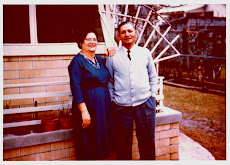
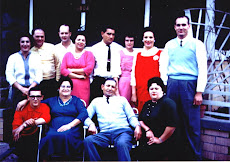
From 1969-1971, my parents, sister and I lived in Baton Rouge, Louisiana. Twice a year Aunt Selema and her family stayed the night with us en route from their home in San Antonio to Biloxi.
On July 20-21, 1969, their visit coincided with the first Apollo 11 moon landing and moonwalk. We (and half a billion other people) were all glued to the TV watching Neil Armstrong take his historic first step for mankind.
All except for my dad, who stuffed with all the good food Mama had spent days cooking, snored through the whole thing in his Barcalounger.
Mama woke him up when it was all over and told him that the astronauts had discovered little green men and that the moon actually was made of green cream cheese just like the Mardi Gras song, "If Ever I Cease to Love" says.
He believed her for about the three seconds it took for him to wake up.
Maybe he just had cream cheese on the brain because he had just eaten half of her famous cheesecake - which actually is out of this world.
It's a classic not-overly-sweet New York style cheesecake. My daddy liked it so well, he often had her make it for events he catered at the restaurant. I often requested it as my birthday cake. I lost the actual recipe during the hurricane, but I think this one is pretty close.
The zwieback crumb crust doesn't overpower the taste of the cheesecake as graham cracker crusts so often do. If you can't find zwieback in the cookie section at the grocery store, try the baby food aisle.
Mama's Out-Of-This-World Cheesecake
Crust:
1 1/2 cups zwieback crumbs
2-3 T granulated (or brown) sugar
1/2 t cinnamon
6 T (3/4 stick) butter or margarine, melted
Batter:
1 1/2 lbs. cream cheese, softened
1 1/2 cups sugar
2 cups sour cream
1-3 T lemon juice
2 t vanilla extract
1/4 t salt
4 large eggs
Sour Cream Topping:
1 1/2 cups sour cream
1/4 cup powdered sugar or 3 T granulated sugar
Position rack in the center of over. Preheat to 350. Grease a 9" springform pan.
For crust, combine zwieback crumbs, sugar and cinnamon. Stir in melted butter or margarine. Press into prepared pan. Chill.
For batter, beat cream cheese until smooth, scraping down sides often. Add sugar. Beat until light. Blend in sour cream, lemon juice, vanilla, salt. Beat in eggs one at a time. DO NOT OVERBEAT TO AVOID CRACKS IN BATTER. Pour into pan. Bake until firm around edges and slightly brown (about 1 1/4 hours). Turn off oven. Cool cake in oven for about 30 minutes. Remove from oven and cool completely before adding topping.
For topping: Combine sour cream, sugar and vanilla. Spread over cooled cheesecake. Refrigerate overnight.
Wednesday, July 15, 2009


Sunday, July 5, 2009
Born on the Fourth of July (Not)
 Happy 4th of July! I realize it's actually the 5th, but we have a tradition of celebrating this particular holiday late in our family.
It started the year my sister was born. She was supposed to be born on July 4. My grandparents were very excited by the prospect of a "firecracker" grandbaby. They were immigrants so for them, this was the ultimate sign that they had arrived in America. My mother, trying to accommodate, followed all their Old Country advice to bring on labor.
They told her to walk. So she walked. And walked. And walked. At the time, we lived right behind the then brand new Edgewater Mall in Biloxi. The indoor mall was the first of its kind in Mississippi. More importantly, it was air-conditioned. She did a lot of her walking there. She brought home a lot of cool things for the nursery. But no baby.
"Eat spicy food" was the next piece of advice from the Point. So on the 3rd, we all went to Angelo's Italian restaurant in Gulfport. My mom ate two helpings of their famous spaghetti and left with the staff's good wishes ringing in her ears and a first-class case of heart burn. But no labor pains.
Ironically, her cousin's wife, also due on the 4th ate Uncle Vitisie's spaghetti daube that same night and welcomed her firecracker baby the very next day. The family joke was my mom ate the wrong spaghetti.
It took my sister several days to make her entrance into the world. But that never stopped us from celebrating her birthday like it was the 4th. We grilled hamburgers and hot dogs. We waved marked-down sparklers (my mother loved a bargain, something my sister has inherited) and ate off red, white and blue paper plates (again marked down). And usually the day before we'd have a ceremonial dinner of homemade spaghetti daube.
Photo: My sister Kim on her birthday, early 1970s. Almost a firecracker baby.
Spaghetti Daube
In spaghetti daube, the meat sauce is made from an inexpensive roast, usually chuck, slow cooked in spicy tomato sauce until it falls apart. It's also good made with chicken or shrimp. The sugar in the recipe helps cut the acidity of the canned tomatoes. The traditional seasonings are nutmeg and cinnamon, but you can sub out oregano and basil.
2-3 large onions, chopped
2-3 stalks of celery chopped
4-5 cloves of garlic, chopped
1 green pepper, chopped
2 large cans of whole tomatoes
2 cans of tomato sauce
1 T of sugar
1/2 t nutmeg
1/2 t cinnamon
Dash of ground cloves or allspice
1 t of Worcestershire sauce
Salt and pepper to taste
Boneless chuck or rump roast (3-4 lbs)
1/4 cup olive or vegetable oil
Water as needed
Saute onions, celery, green pepper and garlic in oil until tender. Add tomatoes and cook down. Add tomato sauce, sugar, seasonings and water as needed. Cook about an hour.Cut meat into large chunks and add. Cover and cook about 2 hours over low flame, stirring and adding water as needed to keep from sticking. Serve over spaghetti, big macaroni or rigatoni.
Monday, June 22, 2009
Summer and "The Pineapple Haircut"
 Summertime on Point Cadet is, was, and always will be HOT. If you have never been there, take it from me, there is no heat like South Mississippi heat.
By the 60's, the grandparents had installed an AC window unit in their dining room. After running around barefoot all day, fishing, crabbing and scouting for returnable bottles by the side of the road, the grandkids would crowd in front of the unit, pushing and shoving for the privilege of getting a full Arctic-like blast on our heat-flushed cheeks.
My mother and her siblings did not have this luxury during the summers of their childhood. Keeping cool then meant lying down for an afternoon nap in a darkened room. And getting the dreaded "pineapple haircut."
As soon as the pleasant temps of early spring warmed around Easter time, my nona marched her daughters to the neighborhood barber shop for identical short bobs. No amount of weeping, wailing and gnashing of teeth (and reportedly there was plenty) could get them out of this seasonal ritual. It was as inevitable as their hand-me-down Easter dresses. When a little Soljan girl grew hair long enough to cover her ear lobes, she was old enough for the pineapple haircut.
I'm not sure how this 'do came by its name. In the front, the cut was the classic ear-length precision bob topped off with a fringe of short bangs, not unlike the style sported by Prince Valiant and Buster Brown. The back was shingled, like a roof. Or perhaps like a pineapple top?
The inaugural cut of the season was entrusted to the skills of a professional barber. My nona administered the touch-up trims herself. If the girls were lucky, she turned the job over to her sister Frances who could cut in a straight line.
During the summer, when it was too hot to turn on the oven, salad platters, using leftovers, were frequently served for dinner. Here are a few of Nona's favorites. These are also included on page 22 of the Slavonian Ladies Auxiliary cookbook.
SALAD PLATTERS
I. Cooked snap beans and boiled, sliced potatoes.
II. Boiled, peeled shrimp, sliced celery, sliced sweet pickles and raw onion rings.
III. Boiled meat (usually a piece of chuck roast left over from soup), sliced potatoes, sweet or dill pickles and raw onion rings. (My favorite)
Sprinkle platters with oil, vinegar, salt and pepper. The bean and shrimp platters are best served a little warm. The beef platter is best at room temperature.
Photo caption: The Soljan girls circa 1935. Clockwise from top left: Marie, Selema, Antonia and Dolores.
Sunday, June 21, 2009
A Father's Day Tribute to Grandpa

It would be wrong to celebrate Father's Day on this blog without a nod to the Soljan family's paterfamilias.
Mato Soljan's story was the classic immigrant's tale -- one of hard work and endurance with its share of tragedy.
Mato Soljan's story was the classic immigrant's tale -- one of hard work and endurance with its share of tragedy.
Unlike my nona, who largely grew up in the heart of her family in Biloxi, my grandfather came here alone as a young adult. He never saw his family or native land again.
A second son, Mato shouldered the responsibilities of supporting his family when his older brother entered the priesthood.
Like many young men on Hvar, he was a fisherman and occasional deck hand/galley help on merchant ships. He served his brother as an altar boy in the parish church.
A second son, Mato shouldered the responsibilities of supporting his family when his older brother entered the priesthood.
Like many young men on Hvar, he was a fisherman and occasional deck hand/galley help on merchant ships. He served his brother as an altar boy in the parish church.
Dalmatia, in the year of my grandfather's birth, was part of the Austrian empire. With all of Europe filled with economic and political instability after the first world war, he began looking abroad for a brighter future. Waves of Croats left home during this time to build new lives in the Americas, Australia and New Zealand.
Mato and a shipmate planned to jump from their merchant ship when it pulled into port in New York. Another crew member ratted them out, and the captain threw them into the ship's brig. Their next opportunity was Galveston, Texas. Knowing they were under surveillance, they jumped overboard a few miles out and swam to shore using the lighthouse as their guide.
According to Mato's immigration papers, this was in December 1921. The water was cold. Mato, just turned 23, was not a strong swimmer. The currents off Galveston can be strong. Still they made it.
He spent a year or so in Galveston washing dishes, bussing tables and helping out in kitchens to make ends meet. He taught himself English by reading newspapers and captions at the movies (silent in those days). He practiced his new language with a Japanese friend from the restaurant.
Biloxi, Mississippi, at this time was known as the Seafood Capitol of the World. It was home to a thriving Croatian community. Jobs on the shrimp boats and in the factories were plentiful. His friend who had jumped ship with him had family there, including a widowed cousin willing to let rooms in her house to new Croatian immigrants from good families.
Mato and a shipmate planned to jump from their merchant ship when it pulled into port in New York. Another crew member ratted them out, and the captain threw them into the ship's brig. Their next opportunity was Galveston, Texas. Knowing they were under surveillance, they jumped overboard a few miles out and swam to shore using the lighthouse as their guide.
According to Mato's immigration papers, this was in December 1921. The water was cold. Mato, just turned 23, was not a strong swimmer. The currents off Galveston can be strong. Still they made it.
He spent a year or so in Galveston washing dishes, bussing tables and helping out in kitchens to make ends meet. He taught himself English by reading newspapers and captions at the movies (silent in those days). He practiced his new language with a Japanese friend from the restaurant.
Biloxi, Mississippi, at this time was known as the Seafood Capitol of the World. It was home to a thriving Croatian community. Jobs on the shrimp boats and in the factories were plentiful. His friend who had jumped ship with him had family there, including a widowed cousin willing to let rooms in her house to new Croatian immigrants from good families.
And so "Mike," as Mato was now known, went to Biloxi. He let a room from his friend's cousin and worked in the shrimp fleet. He continued to save his money with the dream of bringing his mother and youngest siblings to America.
He was never able to realize this dream. His mother died. His siblings drifted into lives of their own. He continued to send money home.
He was never able to realize this dream. His mother died. His siblings drifted into lives of their own. He continued to send money home.
Mike married his landlady's daughter. Together they brought seven children into the world. They buried their oldest son, Mato Jr., before his third birthday. They built a house on the Point. It washed out from under Mike during the hurricane of 1947 as he tried vainly to sandbag it against the surge.
He rebuilt the house himself. And nearly lost it again 22 years later when Camille roared ashore. By now, he was over 70.
Grandpa was a jack of all trades who never fully retired. Into his 60s, he continued part-time work on the shrimp boats. Occasionally he still cooked on the merchant ships. When shrimp season was bad, he moonlighted as a security guard at Keesler Air Force Base. During the Depression, he and Nona operated a bakery. He learned to make and mend shoes, earning him the nickname "Shoemaker Mike."
If America turned out not to be the land of milk and honey as he once believed, Grandpa never complained. He became a U.S. citizen and was proud of it. He presented his 20 grandchildren with dollar bills for buying ice cream, candy, sodas and sno-balls, unaffordable luxuries during his own childhood. He always spoke English with a heavy Croatian accent -- and a baffling Japanese lilt.
His only indulgences were a private stash of Hershey's kisses hidden in his sock drawer and the ever-present pack of unfiltered cigarettes in his shirt pockets. The latter eventually killed him.
He must have known he was dying, but he never let on. The cancer, spreading from his lungs to his brain, told the family for him. By then, he only had weeks to live. His affairs were already in order.
His life may not have been perfect, nor were those of his children and grandchildren. We've all known our share of heartbreak and hard times, but nothing compared to what our lives could have been like had Grandpa been made of less sturdy stuff.
I'm sure that if he were still here, he'd say that he'd do it all over again. And I am grateful to him.
The following is a "boat" recipe that made it ashore to the family kitchen. Nearly all the shrimpers had one like it. It's one of those stick to your ribs one-pot meals. And it's colorful and tasty. The classic recipe calls for a can of tomatoes (as do most Croatian recipes), but I like it just as well without.
Pig's Ass and Cabbage (aka Boat Cabbage)
1 medium head cabbage, chopped into chunks
1-2 onions chopped
2-5 cloves of garlic (depends on your taste for garlic)
l can tomatoes (small or large or you can omit this altogether)
1-2 lbs of picnic ham, cut in large pieces
4 -5 Irish potatoes, peeled and cut in chunks
4-5 sweet potatoes, peeled and cut in chunks
Salt and pepper to taste
Water to cover
In a large pot, layer the ingredients (cabbage, onions, garlic, ham, potatoes) repeating until all are used. Sprinkle with salt and pepper. Add tomatoes (if desired) and water to just under the top layer of cabbage. Cover and cook over medium-low heat until cabbage and potatoes are done, about 1 1/2 - 2 hours. Shake the spot to stir so as not to disturb the layers.
Photo: Grandpa, Mato "Mike" Soljan, in the 1950s
Friday, June 12, 2009
I'll Have a Barq's With That
The other day I had a hankering for a shrimp po-boy and a Barq’s root beer. Out of the bottle, not a can. The two just go together. If there is a quintessential Biloxi meal, this is it. Sure the po-boy was” invented” in New Orleans, and the Barq family operated a bottling plant in New Orleans long before Ed Barq started bottling sarsaparilla in Biloxi, but both sandwich and beverage reached their highest form in Biloxi.
Rosetti’s Café at the corner of Myrtle Street and Howard Avenue served the world’s best po-boys – dressed and pressed. Dressed, of course, refers to the addition of sliced tomatoes and shredded iceberg lettuce. Pressed meant they threw a flatiron or a skillet on the sandwich to make the French bread all toasty and crispy. When you bit into it, all these wonderful messy crumbs fell all over the place. The measure of a truly great po-boy is in how much debris you have to clean up afterward.
Having grown up on pressed po-boys at Rosetti’s I did not realize that the rest of the world does not do this. After enduring a lifetime of blank looks whenever I requested “pressed, please," I just started making po-boys at home. But you can still get them pressed at the Ole Biloxi Schooner, which is what Rosetti’s eventually became.
Drinking Barq’s is just a matter of local pride even though the drink hasn't been bottled in Biloxi in years.
Note that I call it Barq’s, Not root beer.
Barq’s, as you will figure out from your first sip, is in fact root beer, but for years no one called it that for two reasons. For a long time, the Hire’s company owned the trademark on the term “root beer," and once sued Barq’s. The other reason was that Barq’s was the first sarsaparilla drink to contain caffeine, an illegal ingredient in root beer until 1960. No wonder it is so addictive.
The formula was created by Edward Barq, originally one half of the New Orleans’ Barq’s Bottlers, in the late 1890s at his recently purchased Biloxi Artesian Bottling Works. In addition to the caffeine, it differed from other root beers in that it contained less sugar and more carbonation with a less foamy head. There was also a Barq’s crème soda, including a red version, that was bottled by the New Orleans branch of the family. They also bottled the root beer, but made their own syrup, so it tasted slightly different.
In Biloxi, Barq’s was just plain Barq’s with a slogan of “Drink Barq’s. It’s good.” No native Biloxian would dream of drinking anything else.
For years Barq’s remained an under the radar local product known for it’s distinctive long-necked diamond-patterned bottle, blue and orange logo and it’s annual Mardi Gras float shaped like a giant Barq’s bottle.
Like every Biloxi child, my school bag included a handful of Barq’s pencils and a Barq’s wooden ruler. My grandparents’ shed, and every shed on the Point, sported a rusty blue and orange Barq’s thermometer for recording those sizzling summer temps.
Sometime in the 1970s, the Barq family sold the business. The Coca Cola company acquired the Biloxi and Louisiana branches of Barq’s in 1995. Over the years, the various new owners started messing with it, changing the label, calling it root beer, putting it in cans, adding (and then discontinuing) new flavors like grape, lime and orange. They still make the crème soda – both the French vanilla version and the red one so dearly loved in New Orleans.
Thankfully, despite all the changes, you can still get Barq’s served in a bottle at just about any restaurant on the Mississippi Coast, but you do have to ask for it. It’s like a secret handshake.
Barq’s is best enjoyed with a po-boy (preferably seafood), but it also makes a good float over vanilla ice cream. One of my aunts used to baste her Easter ham with it. If you’d like to experiment, there are a slew of recipes here:
http://thebarqsman.com/?cat=5/
Rosetti’s Café at the corner of Myrtle Street and Howard Avenue served the world’s best po-boys – dressed and pressed. Dressed, of course, refers to the addition of sliced tomatoes and shredded iceberg lettuce. Pressed meant they threw a flatiron or a skillet on the sandwich to make the French bread all toasty and crispy. When you bit into it, all these wonderful messy crumbs fell all over the place. The measure of a truly great po-boy is in how much debris you have to clean up afterward.
Having grown up on pressed po-boys at Rosetti’s I did not realize that the rest of the world does not do this. After enduring a lifetime of blank looks whenever I requested “pressed, please," I just started making po-boys at home. But you can still get them pressed at the Ole Biloxi Schooner, which is what Rosetti’s eventually became.
Drinking Barq’s is just a matter of local pride even though the drink hasn't been bottled in Biloxi in years.
Note that I call it Barq’s, Not root beer.
Barq’s, as you will figure out from your first sip, is in fact root beer, but for years no one called it that for two reasons. For a long time, the Hire’s company owned the trademark on the term “root beer," and once sued Barq’s. The other reason was that Barq’s was the first sarsaparilla drink to contain caffeine, an illegal ingredient in root beer until 1960. No wonder it is so addictive.
The formula was created by Edward Barq, originally one half of the New Orleans’ Barq’s Bottlers, in the late 1890s at his recently purchased Biloxi Artesian Bottling Works. In addition to the caffeine, it differed from other root beers in that it contained less sugar and more carbonation with a less foamy head. There was also a Barq’s crème soda, including a red version, that was bottled by the New Orleans branch of the family. They also bottled the root beer, but made their own syrup, so it tasted slightly different.
In Biloxi, Barq’s was just plain Barq’s with a slogan of “Drink Barq’s. It’s good.” No native Biloxian would dream of drinking anything else.
For years Barq’s remained an under the radar local product known for it’s distinctive long-necked diamond-patterned bottle, blue and orange logo and it’s annual Mardi Gras float shaped like a giant Barq’s bottle.
Like every Biloxi child, my school bag included a handful of Barq’s pencils and a Barq’s wooden ruler. My grandparents’ shed, and every shed on the Point, sported a rusty blue and orange Barq’s thermometer for recording those sizzling summer temps.
Sometime in the 1970s, the Barq family sold the business. The Coca Cola company acquired the Biloxi and Louisiana branches of Barq’s in 1995. Over the years, the various new owners started messing with it, changing the label, calling it root beer, putting it in cans, adding (and then discontinuing) new flavors like grape, lime and orange. They still make the crème soda – both the French vanilla version and the red one so dearly loved in New Orleans.
Thankfully, despite all the changes, you can still get Barq’s served in a bottle at just about any restaurant on the Mississippi Coast, but you do have to ask for it. It’s like a secret handshake.
Barq’s is best enjoyed with a po-boy (preferably seafood), but it also makes a good float over vanilla ice cream. One of my aunts used to baste her Easter ham with it. If you’d like to experiment, there are a slew of recipes here:
http://thebarqsman.com/?cat=5/
Friday, June 5, 2009
Blessed With Good Food
 The annual Biloxi Blessing of the Fleet is scheduled for this weekend. The ritualistic event is held near the beginning of shrimp season to pray for a bountiful harvest for the area's shrimpers. I haven't been to the blessing in several years and won't this year as business calls me away to another part of the country. However, growing up, it was a big deal in my family. And one we always looked forward to.
The party would kick off a night or so before the official opening of the season with the crowning of the shrimp queen and king , followed by a big block party (fais do do).
On the day of the blessing itself, the boats, gussied up with flags and pennants paraded around the Mississippi Sound, then lined up to receive a sprinkling of holy water from the pastor at St. Michael’s (in later years joined by the bishop of the Biloxi Diocese).
Most families, ours included, would load up the boat early and head out toward the barrier islands for some swimming and picnicking.
When all of the cousins were small, we would all squeeze onto the Peggy Rae, the boat Grandpa and Uncle Raymond shrimped on. In later years, we upgraded to Uncle Raymond’s double rigger the Lucky Lady which could accommodate our by now much larger group including spouses, boy and girl friends and extended family members. Uncle Steve and my cousin Stevie sometimes brought along their motorboats for water skiing and also to ferry groups up to the beach.
After splashing around, building sand castles and eating ourselves into oblivion, we’d head back to shore to get in line for the blessing. By this time we were all pretty much passed out on air mattresses, quilts and pillows strewn along the decks. What is it about sun and salt water? Our moms would have to nudge us awake so we could get up on our knees and make the sign of the cross when we received our sprinkling.
There was always lots of good picnic style food on the boat - fried chicken, potato and pasta salad, my mom's infamous Coca Cola cake - but the best stuff came later after the nets were dropped. Shrimp dip is one of my favorite recipes for summer entertaining.
Shrimp Dip
1 lb. of shrimp, boiled and peeled (if you want it extra spicy, add a little crab boil to the boiling water)
1 8 oz. package of cream cheese
1 small onion grated
4 green onions chopped
1/4 cup celery chopped fine
1 clove of garlic minced
1/4 tsp. cayenne pepper (you may want to reduce this or eliminate if you don't like your dip too spicy or if you used a lot of crab boil).
Mayonnaise (about 3 Tbsp)
A dash of Worcestershire sauce (to taste).
Grated boiled egg (optional)
Salt and pepper
Soften cream cheese. Boil shrimp in salt (to taste) and crab boil (if desired). Drain. Chop shrimp fine with a knife or in food processor (I actually prefer to leave a few chunks in mine; I like to know what I'm eating).
Mix all the ingredients into the softened cream cheese. Season to taste. Chill. Serve with crackers.
Photo caption: My mom took this photo of her sister, Aunt Selema, and her husband, Uncle Russ, during a family picnic.
Monday, June 1, 2009
Seafood Boils in The Shed
If you had flown over Point Cadet back when it still had houses you would have noticed that most of the neighborhood cottages featured small, usually flat-topped, sheds in their back yards. Sheds were an indispensible part of Point life, especially if your family was part of the seafood industry. And back then, whose family wasn’t?
These sheds weren’t ornamental like the cute little “potter’s sheds” or other outbuildings often highlighted in Southern Living magazine.
Mostly home-built, largely unpainted with metal (rusty) roofs, sheds were storage units/spare bathrooms/ auxiliary kitchens. Many of them began existence as out houses in the days before indoor baths. They had creaky floors, cobwebby interiors and invariably smelled like old grease, saltwater, crab boil and mildew.
Most sheds had deep double-sinks for washing out shrimp nets, cast nets, crab nets. They were located next to the property’s fenceline so you could just spread the nets out along the fence to dry. The sides of sheds were also excellent places to grow the ubiquitous fig trees found in almost Point yard.
Like many sheds, the one at Nona and Grandpa’s house sported a rudimentary shower stall. After spending week or more on the boat handling stinky cargo with nothing more cleansing than a saltwater dip in the Gulf, Grandpa always visited the shed shower before coming inside the house to dispense hugs and kisses.
The grandchildren (most of whom did not live on the Point) found the shed shower extremely exotic -- especially the homemade shampoo with a real egg floating in it. We all liked to take showers out there -- partly because there was no showerhead in the inside bathroom, but mostly just because we could.
Perhaps, the shed’s most distinguishing feature was its old gas stove. Nona occasionally cooked dinner on it during the height the summer, but its real purpose was to fuel the seafood boils and fish fries that constituted summer entertaining on the Point.
For all the reams of newsprint and hours of debate that have been devoted to this subject, there’s really nothing complicated about a seafood boil. Cover seafood (shrimp or crabs) with water. Add lots of salt, peppercorns, whole heads of garlic, a couple of celery stalks, an onion cut in quarters, halved lemons and crab boil to taste. Boil it all until the seafood turns bright red. Drain and dump the seafood out on a picnic table covered with newspaper and dig in.
Today, people often like to add corn, potatoes and even sausage to their seafood boil. As tasty as this is, to my mind this seems more like a classic Low Country Frogmore Stew than something I remember from Point Cadet.
On the Point, there was only one permissible seasoning for a seafood boil, Zatarains crab boil. The only question was did you want the liquid kind out of a bottle, or the dry kind that comes in the little gauzy packets. Old Bay Seasoning, though delicious in the appropriate context, is an East Coast spice. It just didn’t – and never will -- belong in a Point Cadet seafood boil.
My Uncle Raymond, who was also a shrimper, liked his seafood spicy, spicy, spicy. My outstanding memory of his seafood boils is of the cayenne-spiked juice dribbling out of the shimp and crab shells and stinging the mosquito bites that always dotted my arms and legs. I was, am and always will be skeeter bait.
My grandfather didn’t like to overpower the delicate flavor of the seafood. When he was manning the stove, he went easy on the crab boil. This is also my preferred way of eating them.
Try it both ways, and judge for yourself.
These sheds weren’t ornamental like the cute little “potter’s sheds” or other outbuildings often highlighted in Southern Living magazine.
Mostly home-built, largely unpainted with metal (rusty) roofs, sheds were storage units/spare bathrooms/ auxiliary kitchens. Many of them began existence as out houses in the days before indoor baths. They had creaky floors, cobwebby interiors and invariably smelled like old grease, saltwater, crab boil and mildew.
Most sheds had deep double-sinks for washing out shrimp nets, cast nets, crab nets. They were located next to the property’s fenceline so you could just spread the nets out along the fence to dry. The sides of sheds were also excellent places to grow the ubiquitous fig trees found in almost Point yard.
Like many sheds, the one at Nona and Grandpa’s house sported a rudimentary shower stall. After spending week or more on the boat handling stinky cargo with nothing more cleansing than a saltwater dip in the Gulf, Grandpa always visited the shed shower before coming inside the house to dispense hugs and kisses.
The grandchildren (most of whom did not live on the Point) found the shed shower extremely exotic -- especially the homemade shampoo with a real egg floating in it. We all liked to take showers out there -- partly because there was no showerhead in the inside bathroom, but mostly just because we could.
Perhaps, the shed’s most distinguishing feature was its old gas stove. Nona occasionally cooked dinner on it during the height the summer, but its real purpose was to fuel the seafood boils and fish fries that constituted summer entertaining on the Point.
For all the reams of newsprint and hours of debate that have been devoted to this subject, there’s really nothing complicated about a seafood boil. Cover seafood (shrimp or crabs) with water. Add lots of salt, peppercorns, whole heads of garlic, a couple of celery stalks, an onion cut in quarters, halved lemons and crab boil to taste. Boil it all until the seafood turns bright red. Drain and dump the seafood out on a picnic table covered with newspaper and dig in.
Today, people often like to add corn, potatoes and even sausage to their seafood boil. As tasty as this is, to my mind this seems more like a classic Low Country Frogmore Stew than something I remember from Point Cadet.
On the Point, there was only one permissible seasoning for a seafood boil, Zatarains crab boil. The only question was did you want the liquid kind out of a bottle, or the dry kind that comes in the little gauzy packets. Old Bay Seasoning, though delicious in the appropriate context, is an East Coast spice. It just didn’t – and never will -- belong in a Point Cadet seafood boil.
My Uncle Raymond, who was also a shrimper, liked his seafood spicy, spicy, spicy. My outstanding memory of his seafood boils is of the cayenne-spiked juice dribbling out of the shimp and crab shells and stinging the mosquito bites that always dotted my arms and legs. I was, am and always will be skeeter bait.
My grandfather didn’t like to overpower the delicate flavor of the seafood. When he was manning the stove, he went easy on the crab boil. This is also my preferred way of eating them.
Try it both ways, and judge for yourself.
Subscribe to:
Posts (Atom)